
Rome does not ask for attention. It earns it at every corner. A turn down a narrow lane might reveal a Renaissance fountain. A short walk from a crowded café can lead to the ruins of an ancient empire. A simple plate of pasta can explain more about local life than any guidebook.
Few cities carry so many layers with such ease. Rome is ancient, religious, artistic, political, noisy, elegant, and deeply human. It is a city where history does not sit behind glass. It rises from the pavement, frames the skyline, and shapes daily routines.
That is part of why Rome is widely recognised as one of the most visited cities in the world, often ranked third among global city destinations. Travellers come for the Colosseum, the Vatican, the Trevi Fountain, and the promise of unforgettable food. They stay impressed by the rhythm of neighbourhoods, the warmth of long lunches, and the feeling that every walk has a story.
Why Rome remains one of the world’s great travel cities
Rome has something most destinations want but cannot imitate: continuity. The city has been shaped by emperors, popes, artists, traders, immigrants, and ordinary families for more than two thousand years. That long story gives Rome its rare appeal.
The city’s popularity also comes from its range. A first-time visitor can pack a day with world-famous sights. A returning traveller can focus on quiet churches, food markets, local trattorias, or lesser-known ruins. Rome rewards both styles.
Several factors help explain why it ranks so highly among global destinations.
Its landmarks are instantly recognisable.
The Colosseum, Pantheon, Spanish Steps, Trevi Fountain, and St Peter’s Basilica are not just famous in Italy. They belong to the shared visual memory of global travel.
Its history is easy to feel.
Many historic cities require imagination. Rome gives the imagination a head start. Ancient columns stand beside traffic. Medieval streets lead to Baroque piazzas. Archaeological sites sit close to restaurants and apartments.
Its culture is alive, not staged.
Rome is not only a place to observe the past. It is a city of neighbourhood markets, evening walks, football loyalties, family meals, religious processions, street musicians, and café conversations.
Its food is simple and memorable.
Roman cuisine has become one of the city’s strongest reasons to visit. It is comforting, local, and full of personality.
It works for many kinds of travellers.
Couples, families, solo travellers, history lovers, food travellers, architecture fans, and pilgrims can build very different but equally rich trips.
Rome’s global status also benefits from its location. It is a natural gateway to the rest of Italy. Many travellers combine it with Florence, Naples, the Amalfi Coast, Tuscany, or Venice. Yet Rome rarely feels like just a stopover. It feels like the main event.
Ancient history still shapes the modern city
Rome’s ancient history is not limited to one district. It spreads across the centre like an open-air museum, though that phrase barely captures the feeling. The past appears in fragments and grand statements. Sometimes it is a massive amphitheatre. Sometimes it is a worn stone built into a later wall.
The Roman Empire left behind more than ruins. It left ideas about law, roads, architecture, public space, engineering, and civic life. Visiting Rome gives those ideas a physical setting.
The Colosseum and the scale of imperial Rome
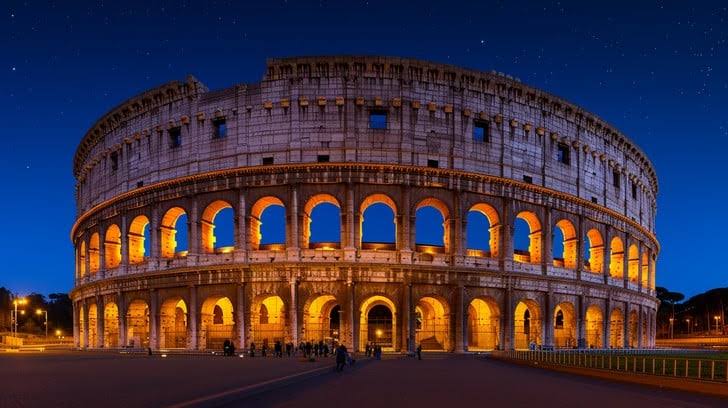
The Colosseum is the most famous symbol of ancient Rome for good reason. It shows the ambition and technical skill of the empire. Its arches, corridors, seating levels, and underground structures speak to a society that understood spectacle and crowd movement on a huge scale.
To enter the Colosseum is to stand inside a place built for public drama. It is impressive from the outside, but the interior adds context. Visitors can better understand how the arena worked, how spectators moved through the structure, and how entertainment reflected power.
Nearby, the Roman Forum gives a different kind of experience. It was once the political, religious, and social centre of ancient Rome. Today, its temples, basilicas, and triumphal arches require a slower eye. A good guide can make the Forum come alive by explaining what stood where and why it mattered.
The Pantheon and the genius of Roman design
The Pantheon feels almost impossible the first time you step inside. Its dome, oculus, and balanced proportions still have the power to surprise. Built as a temple and later transformed into a church, it is one of Rome’s best examples of continuity.
Unlike many ancient structures, the Pantheon remains whole enough to be experienced as architecture rather than only as a ruin. Rain can fall through the oculus. Light moves across the interior during the day. The building feels both mathematical and spiritual.
Streets where centuries overlap
Rome’s history did not stop with the empire. The city also carries early Christian, medieval, Renaissance, and Baroque layers. This mix gives Rome its unusual texture.
A single walk might include:
- Ancient ruins near Largo di Torre Argentina
- Renaissance palaces around Campo de’ Fiori
- Baroque drama in Piazza Navona
- Quiet churches filled with extraordinary art
- Stone bridges crossing the Tiber
This layered quality makes Rome especially rewarding on foot. The city was not designed around modern convenience, but that is part of its charm. Its irregular streets slow the pace and invite discovery.
Roman cuisine is simple, local, and unforgettable
Roman food is not built on excess. It relies on strong ingredients, practical traditions, and confident simplicity. The best dishes often look plain at first. Then the flavour explains everything.
Roman gastronomy grew from home cooking, seasonal markets, and the resourcefulness of working-class communities. The result is a cuisine that feels direct and deeply satisfying.
The four classic Roman pastas
Many travellers arrive with pasta in mind, and Rome delivers. Four dishes define the city’s pasta identity.
Carbonara
Made with eggs, pecorino Romano, guanciale, and black pepper, carbonara should be creamy without cream. The balance depends on heat, timing, and quality ingredients.
Cacio e pepe
This dish uses pasta, pecorino Romano, and black pepper. It sounds simple, but the sauce requires skill. When done well, it is silky, sharp, and aromatic.
Gricia
Often described as a close relative of carbonara, gricia uses guanciale, pecorino Romano, and black pepper, without egg. It is rich, savoury, and deeply Roman.
Amatriciana
With tomato, guanciale, pecorino Romano, and chilli, amatriciana brings brightness and depth. It has roots beyond Rome but is firmly loved in the capital.
These dishes are best eaten in trattorias where the menu is short and the service is relaxed. A small restaurant in Testaccio, Trastevere, Monti, or near the Jewish Quarter can offer a meal that becomes a trip highlight.
Local delicacies beyond pasta
Roman cuisine has many other stars. Supplì are a favourite snack, crisp rice balls filled with tomato rice and mozzarella. When pulled apart, the cheese stretches in a way that locals often compare to a telephone wire.
Carciofi alla Romana, Roman-style artichokes, are tender, herbal, and elegant. Carciofi alla Giudia, associated with Rome’s Jewish culinary tradition, are fried until crisp and dramatic. Both show how one ingredient can take on very different personalities.
Pizza al taglio, sold by weight, is ideal for travellers exploring on foot. The slices come in many toppings, from potato and rosemary to tomato, mozzarella, courgette, or cured meats. It is quick, affordable, and very Roman.
Then there is gelato. The best gelaterias focus on natural colour, seasonal flavours, and balanced sweetness. Pistachio, hazelnut, lemon, and stracciatella are classic choices.
For coffee, Romans tend to keep things quick. A cappuccino in the morning, an espresso at the counter later in the day, and no need to linger unless the moment calls for it.
Roman cooking turns a few ingredients into something unforgettable.
Monuments and landmarks tell the city’s story
Rome’s monuments are not only places to photograph. They explain the city’s identity. Each one reflects a different era, ambition, and way of seeing the world.
St Peter’s Basilica and the Vatican Museums
Technically within Vatican City, St Peter’s Basilica and the Vatican Museums are central to most Rome itineraries. The basilica is one of the most important religious buildings in the world, known for its scale, art, and spiritual importance.
The Vatican Museums hold vast collections gathered over centuries. The Sistine Chapel is the most famous stop, but the journey through galleries, courtyards, maps, sculptures, and painted rooms is part of the experience.
This area can be crowded, so planning matters. Early entry, guided routes, or carefully timed visits can make a major difference.
Trevi Fountain and the theatre of public space
The Trevi Fountain is one of Rome’s most visited landmarks. Its appeal comes from movement, sound, and setting. Water crashes over sculpted stone. Visitors gather in a tight piazza. The fountain feels almost too grand for the space, which makes the encounter more dramatic.
Tradition says throwing a coin into the fountain promises a return to Rome. Whether or not one believes it, the ritual adds to the site’s charm.
Piazza Navona and the Baroque city
Piazza Navona shows Rome at its theatrical best. Built on the site of an ancient stadium, the piazza keeps the long oval shape of its earlier life. Today, it is known for fountains, cafés, artists, and the movement of people through open space.
The Fountain of the Four Rivers by Bernini is the centrepiece. Around it, the square becomes a scene of daily Roman life, part monument and part meeting place.
The Spanish Steps and the art of lingering
The Spanish Steps connect Piazza di Spagna with the church of Trinità dei Monti. More than a staircase, they are a social landmark. The area around them is known for shopping, historic cafés, and elegant streets.
Like many Roman landmarks, the steps are best enjoyed with patience. Arrive early for a quieter view, or visit in the evening when the city lights soften the stone.
EveryDay Tours in Italy helps visitors experience Rome differently
A city as layered as Rome can be overwhelming. It is easy to see the major sights and still miss the meaning behind them. That is where a thoughtful guided experience helps.
EveryDay Tours in Italy offers popular ways to explore the city with more context, better pacing, and local insight. Rather than treating Rome as a checklist, these experiences help visitors connect places, stories, and flavours.
For travellers comparing Rome Tours, the best choice often depends on the kind of memory they want to bring home. Some want ancient history. Some want food. Others want hidden corners or a smooth first introduction to the city.
| Tour experience | What makes it special | Best for |
| Colosseum and Ancient Rome tours | Connects the Colosseum, Roman Forum, and Palatine Hill with stories of politics, power, and daily life | First-time visitors and history lovers |
| Vatican and Sistine Chapel tours | Helps make sense of huge collections and crowded spaces | Art lovers, pilgrims, and travellers short on time |
| Food tours in Roman neighbourhoods | Introduces local dishes, markets, and family-run food spots | Food-focused travellers |
| Walking tours through historic Rome | Links piazzas, fountains, churches, and side streets into one clear route | Visitors who enjoy slow discovery |
| Evening tours | Shows monuments and neighbourhoods in softer light with a calmer mood | Couples, photographers, and summer travellers |
The appeal of guided tours of Rome is not only convenience. A good guide changes the scale of the city. The Forum becomes a political centre rather than a field of ruins. A church becomes a gallery. A pasta dish becomes part of a local tradition.
Unique experiences that go beyond sightseeing
EveryDay Tours in Italy can be especially useful for travellers who want more than standard photo stops. Rome becomes richer when experiences are built around themes.
Food-focused routes can introduce supplì, Roman pasta, cured meats, cheeses, gelato, and market culture. Ancient history tours can explain how emperors used architecture to project authority. Vatican visits can help travellers understand artistic details that are easy to miss in a crowd.
Smaller walking experiences can also reveal neighbourhood character. Trastevere offers lanes, ivy-covered walls, and evening energy. Testaccio connects food traditions with Rome’s working-class history. Monti blends old streets with independent shops and relaxed places to eat.
For a first visit, pairing one major historical tour with one food or neighbourhood tour creates a strong balance. It gives the trip both depth and pleasure.
When to visit and how to enjoy Rome well
Rome is worth visiting year-round, but the experience changes by season. Spring and autumn often bring pleasant weather and long walking days. Summer can be hot and crowded, especially around major sights. Winter is quieter, with cooler air and a more local feel.
A few habits make Rome easier to enjoy:
- Book major attractions in advance when possible
- Start early for popular landmarks
- Wear comfortable shoes for cobblestones
- Carry water, especially in warmer months
- Leave time between planned stops
- Eat away from the busiest landmark entrances when possible
- Visit churches respectfully and check dress expectations
- Use guided tours when context will improve the experience
The best Rome itinerary has structure but still leaves room for chance. Some of the city’s finest moments are unplanned: a quiet courtyard, a street musician near a bridge, a perfect espresso, or a sunset over terracotta rooftops.
Rome rewards curiosity
Rome’s greatness does not come from one monument, one museum, or one meal. It comes from the way all of these elements live together. Ancient ruins stand beside apartment blocks. Sacred art sits inside everyday churches. Food traditions survive because locals still love them. Public squares remain places to meet, watch, argue, celebrate, and rest.
That is why Rome continues to rank among the world’s most visited cities. It offers the famous sights travellers dream about, then gives them smaller memories they did not know to expect.
Go for the Colosseum, the Vatican, the pasta, and the fountains. Stay open to the side streets, the neighbourhoods, the local flavours, and the stories behind the stones. Rome reveals itself slowly, but even a short visit can feel unforgettable.